
Important: Please make sure that your shipping address is up to date! You can change it on your Crowd Supply account page. Please also check out the delivery status page.
Hi there, and welcome to our monthly status update!
TL;DR: Since our last update, we’ve sent out mini batches 10, 11, 12, 13, 14, and 15, which is, yet again, the highest volume batch we’ve produced so far, but not as high as we aim for. We had to allow a week of vacation for our staff in the middle of summer. Without the vacation, we’d have likely hit our target volume, so the ramp-up is still not over. Apart from manufacturing, Agent and the firmware keep advancing, and some major progress is expected soon.
A monthly UHK update wouldn’t be complete without featuring your awesome feedback.
Our first English review is out on Reddit, which you’re welcome to read! As creators, reading such nice words is all we can wish for.
But Max, the writer of this review didn’t stop there, and pimped his UHK with the third-party Canvas XDA keycap set.
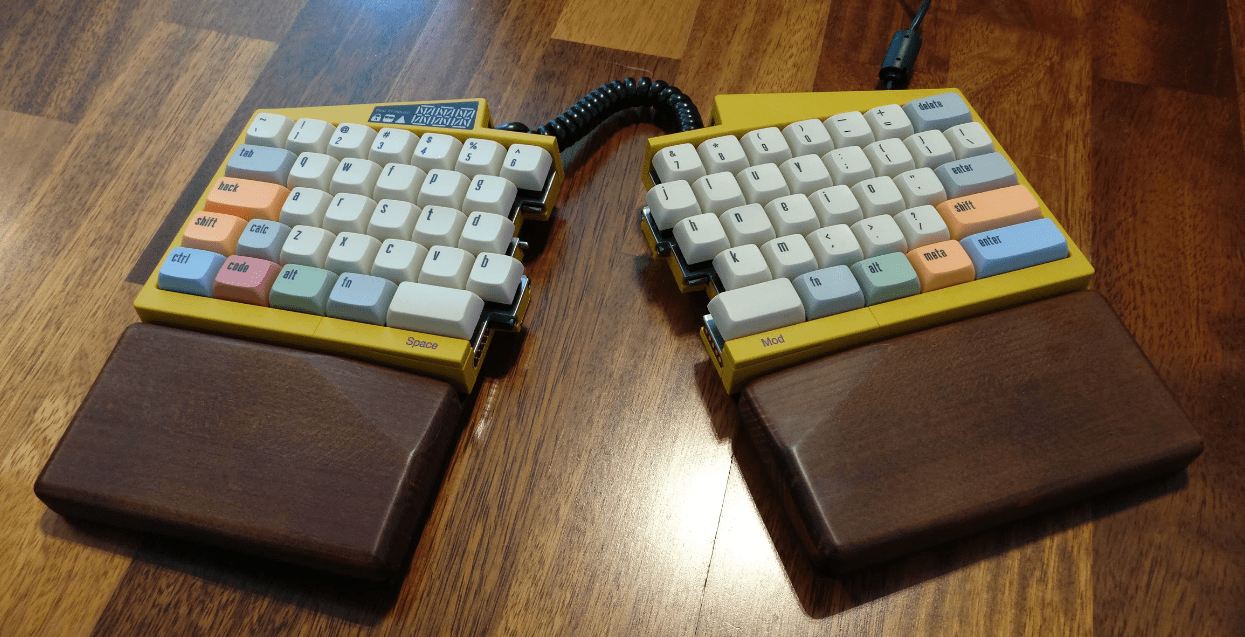
And Max still couldn’t get enough, so he ended up writing a full-blown UHK keycap replacement guide on Reddit! Thanks so much for the great work, Max!
Third-party keycap sets are clearly in the vogue nowadays. We believe the following picture is quite a sight!
#GotMyUHK extra white case! Also thank you @UltHackKeyboard for the quick email reply, I wasn't expecting a response on a Sunday 🌞 pic.twitter.com/jK1sKv6yGZ
— Hayframe (@Hayframe) July 8, 2018
And you keep sending us your nice tweets:
Totally worth the three year wait. Talk about top quality in packaging, hardware and software. Thanks so much for your dedication and amazing work @UltHackKeyboard! #gotmyuhk 🙂 pic.twitter.com/TUXuLJGna6
— Ivars Zarins (@ivarszarins) June 19, 2018
I'm gonna be super productive, as soon as I get used to it.
Perfect packaging, very well built product, fantastic typing experience. #GotMyUHK Thank you so much @UltHackKeyboard pic.twitter.com/PFGjrGGAVP— Lajos Koszti (@Ajnasz) June 21, 2018
Last but not least, even Michael Bolton approves the UHK.
Hi @UltHackKeyboard .
My UHK arrived some days ago. Orange with green cherry mx.
It's been 2,5 years waiting... a looong time...
The keyboard is so freaking good, feels so solid, sound so good, it's so confortable... that I've just ordered a second one with palm rest!
Good job!! pic.twitter.com/lVbqnjgjF1— Bigotum Maximus (@BigotumMaximus) June 28, 2018
Please keep it up! We love hearing from you.
We keep pushing Agent and the firmware at a steady pace. Most of these improvements come in small increments, and many of them are under the hood changes, so it’s hard to notice them. But they add up in a big way over time, and every now and then some user-facing changes are committed.
Some of you found it cumbersome to remap keys on all keymaps and/or layers, so we extended the UI of Agent accordingly. The tooltip should speak for itself.
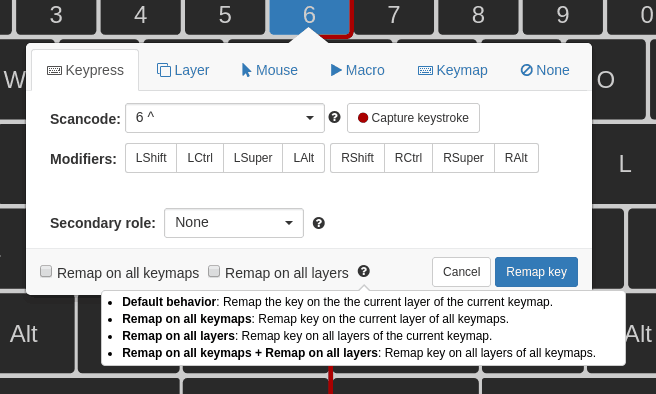
We also added a separator line between the halves, so it’s easier to locate keys.

The above are frontend changes, but there’s a lot more going on under the surface.
Recently, we’ve been working hard on fixing a Windows-specific firmware bug that is responsible for media key repetition, and not letting your computer go to sleep on Windows. We’ve managed to fix this bug, but then a nondeterministic bug emerged which made the UHK hang sometimes only after hours, which turned out to be very problematic to fix. We believe that we did fix it, but I want to test it thoroughly before releasing a new firmware version.
The new firmware release will also contain a major feature: the macro engine! We promised macro support a long time ago, so we’re super excited to make it happen. Agent is already capable of editing macros, but the macro engine of the firmware is a critical piece of the puzzle to make macros actually work on your UHKs.
Let me just say that we’re super focused on implementing the promised features, and even more so on fixing bugs. One reason is that they directly translate to a great user experience. The other reason is that as more and more UHKs make their way to you, we keep getting a lot of reports of the same issues, so fixed bugs directly translate to lower overhead. Please do keep reporting bugs, but always use the latest Agent and latest stable firmware versions.
Running production, developing Agent and the firmware, and answering messages is a lot to deal with at the same time, and as a result, we couldn’t devote time for the modules over the last month. We’re asking for your patience, as we’re rather overloaded nowadays.
Thank you for reading this update! We’ll be keeping you updated on all things UHK, and we’re looking forward to talking with you on 2018-08-16.
We get this question from time to time, and the answer is not as obvious as one might think. I'm about to explain it in-depth, but first, I'll give you a short answer in case you're in a hurry. Please consider the relevant tooltip of Agent:

Hopefully, this explains what to do. You're welcome to suggest better phrasing in the comments, but this is the short and sweet version. And now on to the more detailed explanation.
The most important thing to understand is that USB keyboards (the UHK included) do not send characters to your computer. No, Sir. They send scancodes. When you press a key, a scancode of 1 to 255 gets sent to the computer. It's not a character but a number!
Now think about this: There are 255 different scancodes that must be mapped to more than 100,000 characters that are used on planet Earth! How so? This is how:
Your operating system translates scancodes to characters based on your actual operating system keyboard layout.
Let me give you an example to make you realize the crucial role of your OS layout. Let's say that an American, a German, and a Russian user purchase USB keyboards of the same physical layout. Now let's take the semicolon key according to the American layout. On all three keyboards, when pressing this key, the scancode 51 gets sent to the computer, yet, the character ";", "ö", and "ж" appear on the screen of the American, German, and Russian users, respectively, merely because they use different OS keymaps.
When it comes to mapping scancodes to characters, the situation is actually slightly more nuanced because modifiers also affect the mapped characters. For example, on the US layout, Shift + 4 produces "$", and on the Hungarian layout, AltGr + U produces "€", but this doesn't alter the nature of the beast.
There's a mechanism called "Alt codes", which allows users to produce various accented characters in a way that is (mostly) independent of the current OS keymap.
Alt codes provide a way to output various characters in a way that is mostly independent of the current OS keymap, but they're OS-specific, and they don't work in every environment. For example, let's say that your hard drive is encrypted, and you have to type a password before the OS boots up. Depending on your OS, Alt codes may not be available at this point. On Linux, they also can't be used in terminals outside of the X server, so you can't rely on them in every environment.
Given that Alt codes are sequences of keystrokes, they're ideally suited to be assigned to keys using UHK macros. For example, you can bind the Alt code of "é" to Mod+e. UHK macros are very handy since they're saved to the on-board memory of your UHK and always available without running special software once you set them up via Agent. I'm about to elaborate on implementing Alt codes on your UHK.
The macro editor of Agent is very intuitive to use, and based on the above, one should be able to create macros that implement Alt codes. There are some gotchas, though.
First up, Alt codes are OS-specific which will pose a problem if you use multiple OSes. If so, you'll have to create all your Alt code macros for every OS you use, and then create OS-specific keymaps in Agent and bind the macros of the respective OSes. This is clearly laborious, but there's no way around it. We won't implement USB fingerprinting in the UHK firmware to detect OSes because it's fundamentally unreliable.
The second gotcha is that you won't be able to compose Alt codes with modifiers. Imagine holding Shift, then typing Alt code key sequences, then releasing Shift. Modifiers clearly mess with Alt codes.
Third, some Alt codes are dependent on the state of your OS. You have to have NumLock enabled for Windows Alt codes, and Mac accent codes are dependent on the OS keymap in use.
Some of you were wondering why Agent doesn't offer or display accented characters. This is one of those features that seem like a no-brainer from a user perspective, but in practice, it's not only incredibly hard to implement but cannot be implemented properly. Let me tell you why.
In order for Agent to expose accented characters, it must be aware of the current OS keymap. Being a cross-platform application, it'd have to query the actual keymap on Linux, Mac, and Windows. A quick search reveals ways to query this information (often rather obscure ways) via OS-specific APIs, but I have found no way to query the actual mappings between scancodes and characters, which is critical.
Without the exact per-key mappings, Agent would have to have a database of every single OS-specific layout, such as "French (Bepo, ergonomic, Dvorak way, Latin-9 only)" or "Russian (Ukraine, standard RSTU)". We could extract such a database from the relevant Linux packages, but these layout names are not standardized, so they're inconsistent across OSes, and the mappings surely differ in some ways.
The bottom line is that it'd take huge resources to implement the above, and we'd end up with a half-assed implementation, given that a perfect implementation is practically infeasible. Even if we were able to implement this perfectly, I don't think it would be a good idea. I can foresee users complaining that they set up the é key in Agent, then plugged their UHK into another machine (featuring a different OS keymap), and the é key suddenly became a semicolon. Users should actually understand how things work when it comes to this topic.
When remapping UHK keys, you should keep in mind that:
That's it, folks! If you're still reading, then you're truly one of the brave few. Any questions, feel free to shoot them in the comments.
You can specify custom scancodes on the UHK. See how.
Important: Please make sure that your shipping address is up to date! You can change it on your Crowd Supply account page. Please also check out the delivery status page.
Hi there, and welcome to our monthly status update!
TL;DR: Since our last update, we’ve sent out mini batches 5, 6, 7, 8, and 9. This is the highest volume we’ve produced so far, but not as high as we ultimately aim for. We’ve fallen behind with pre-assembly due to the aforementioned staffing issues, but we’re catching up, and the ramp up is still underway. The development of the modules is in progress.
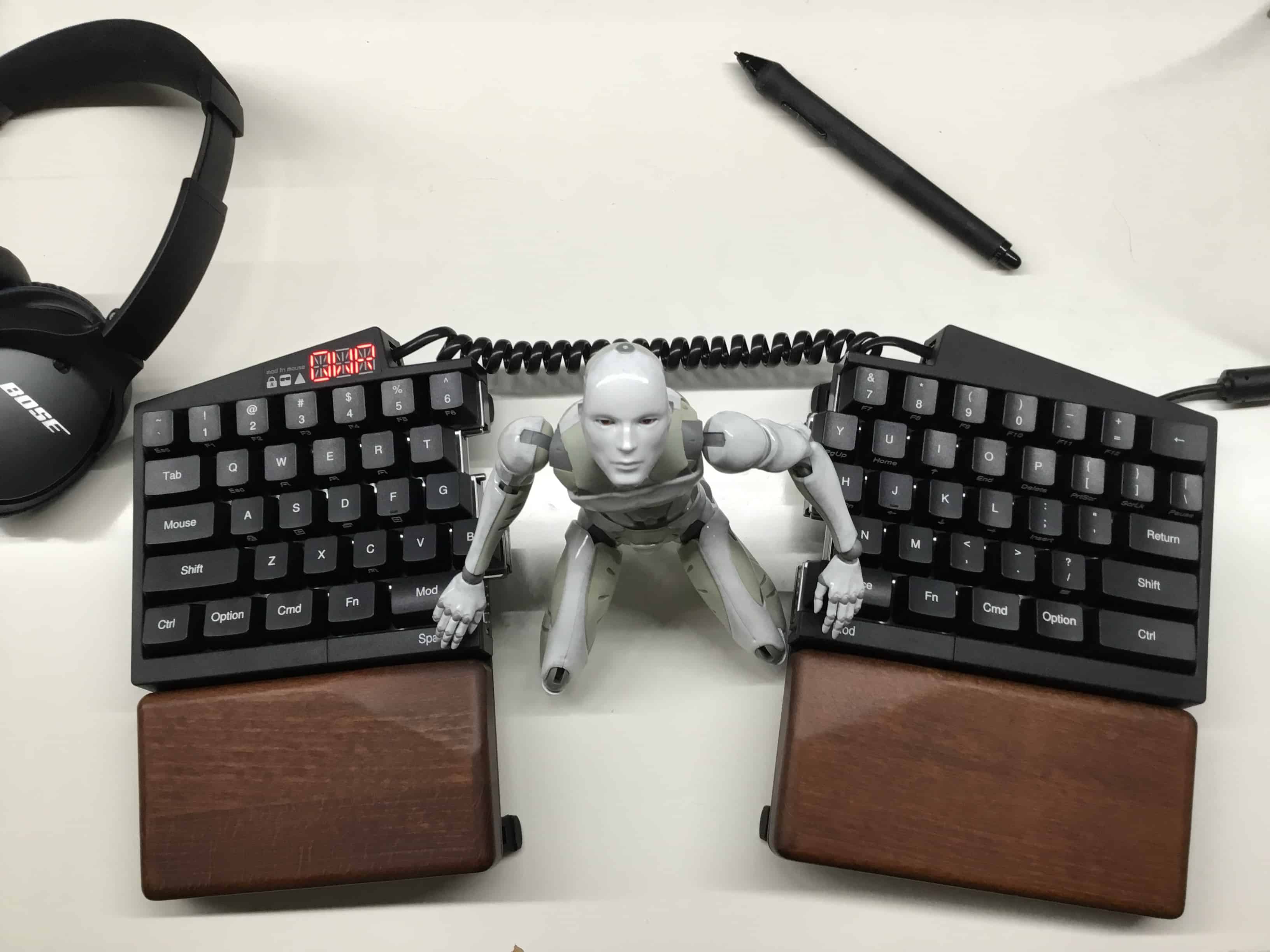
First up, let us share a beautiful and very original picture that we love very much. It’s made by Yukio Miyamoto. He is a masterful illustrator who also happens to be an awesome backer of ours.
The feedback you keep giving to us continue to be amazing.
@UltHackKeyboard #GotMyUHK huge thanks to the UHK team. It’s been 3 yrs but the way you strived for quality and the excellent communications to your backers really showed! Fantastic result!! Thank u this is the most exciting piece of HW I have gotten for my PC in the last 5 yrs! pic.twitter.com/0ZF3FxjehY
— Carlos (@carll) June 7, 2018
#GotMyUHK @UltHackKeyboard You guys matched my desk almost perfectly. 🙂 Initial impressions: VERY good.
+ Caps and Switches all feel premium.
+ Agent and the setup was painless and well done.
+ Overall feel is outstanding! Great quality and very solid! pic.twitter.com/p0FYWSP24h— Christopher Brummet (@SwordOfStories) May 30, 2018
The following is an interesting one. Did you know that when armed with a USB OTG cable, you can connect your UHK to your Android phone, and you can probably also control the mouse pointer? (Recent Android kernels tend to support USB mice.)
Typing station. pic.twitter.com/P9OHJhImOi
— Kafka Fuura (P.N.) (@ZephyrRz) June 3, 2018
Lastly, this one made us laugh out loud:

Please keep them coming! We’re excited to hear about y’all.
Production does keep us busy, and we can’t yet devote as much time for development as we’d like to, but we’ve made some progress with the modules.
The following is sitting on my desk, and it might just be the weirdest keyboard ever.
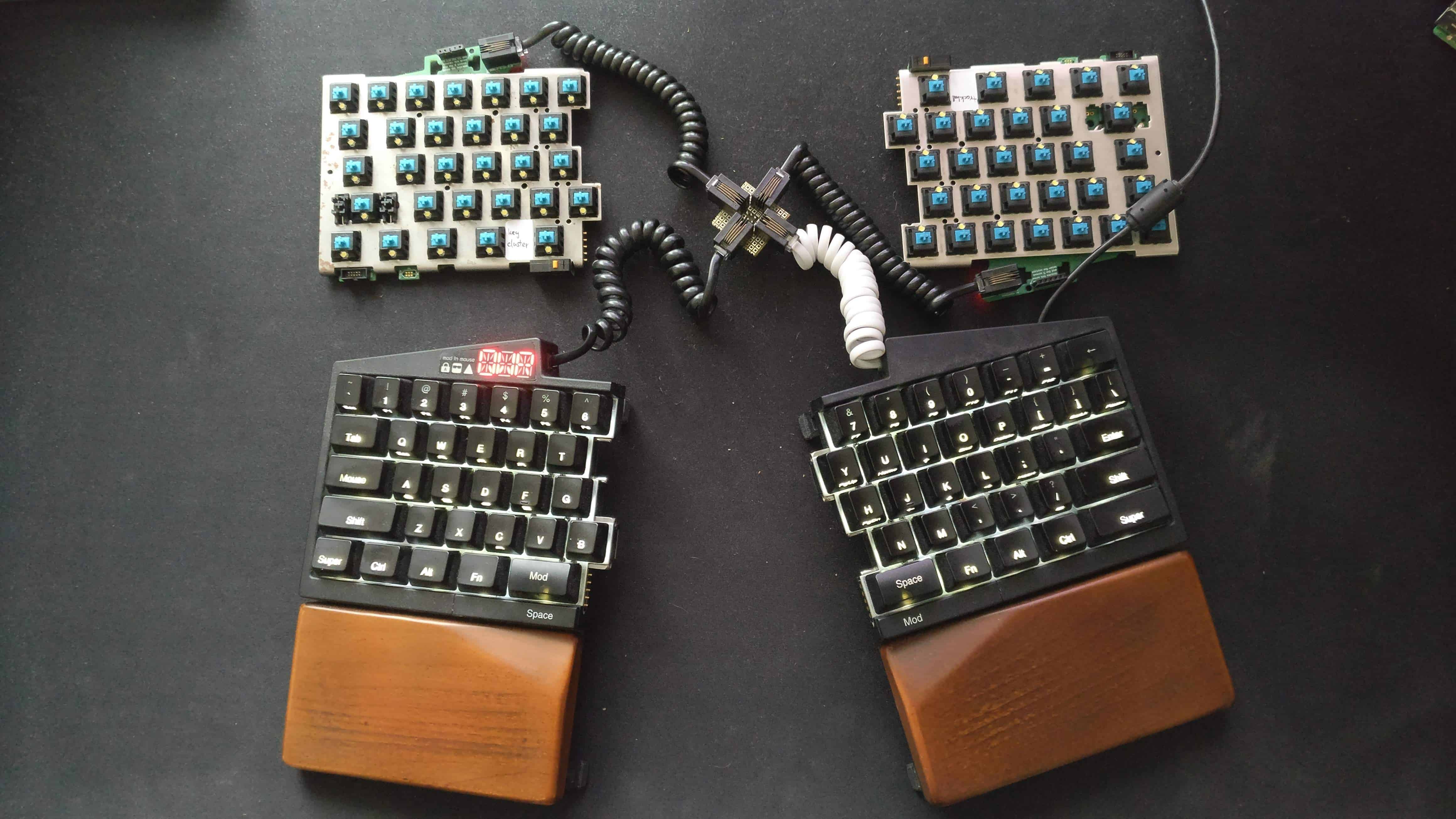
But most importantly, this Frankenstein keyboard is a proof of concept! This is 1 UHK right half and 3 left halves interconnected. The top left half simulates a left module, and the top right half (which is a left UHK half) simulates a right module.
The keyboard halves and modules communicate via the main I2C bus of the UHK. The right UHK half is the I2C master which initiates all communication on the bus. The rest of the devices are I2C slaves. From the standpoint of the firmware, there is no difference between the left keyboard half and the modules.
I basically dremeled a protoboard to size, and created a passive 4 port 4P4C hub out of it to interconnect the pieces. Then I added test keymaps for the modules, and reflashed the firmwares of the left module and the right module, so that their I2C addresses don’t clash with the I2C address of the left UHK half.
This proof of concept works as intended, and now I can type on all the 4 keyboard halves, making me seem like I overcompensate for something.
As you can imagine, this is the first step of many to follow. Next up, I will extract the part of the firmware that will be shared across the modules and the left half, and then create separate firmware projects for the modules, utilizing the extracted code.
Then I’ll attach the peripherials specific to the individual modules to these development UHK left halves, and write firmware code to drive them.
In the meantime, András will finalize the plastic cases and mechanical design of the modules, so that they’ll be optimized for manufacturing. This will, in turn, enable me to design the custom PCBs of the modules.
In a way, developing the modules is like developing additional products - 4 products to be exact, and even though we’ve gained a lot of experience, realistically speaking, there’s no way the modules will be ready by the end of August as originally planned.
Given the above, we’re changing the estimated delivery date of the modules to the end of December which should be more realistic. None of us are happy with delays, but we’d much rather take our time than compromise the quality of the product even the slightest bit. According to your feedback, it’s the right thing to do.
Thank you for reading this update! As always, we’ll be keeping you updated on all things UHK, and we’re looking forward to talking with you on 2018-07-12.
Important: Please make sure that your shipping address is up to date! You can change it on your Crowd Supply account page. Please also check out the delivery status page.
Hi there, and welcome to our monthly status update!
TL;DR: Our factory is up and running! According to the aforementioned delivery page, we’ve already sent out the first mini batch, so some of you should get your orders within days. Given our most recent production data, we’ll be able to deliver batch 1 of 2,000 UHKs and related accessories by the end of July. Many of you will get your orders much faster depending on your place in the queue. Everything’s looking great, and we’ll be transitioning to the modules soon.
Some UHKs of mini batch 1:
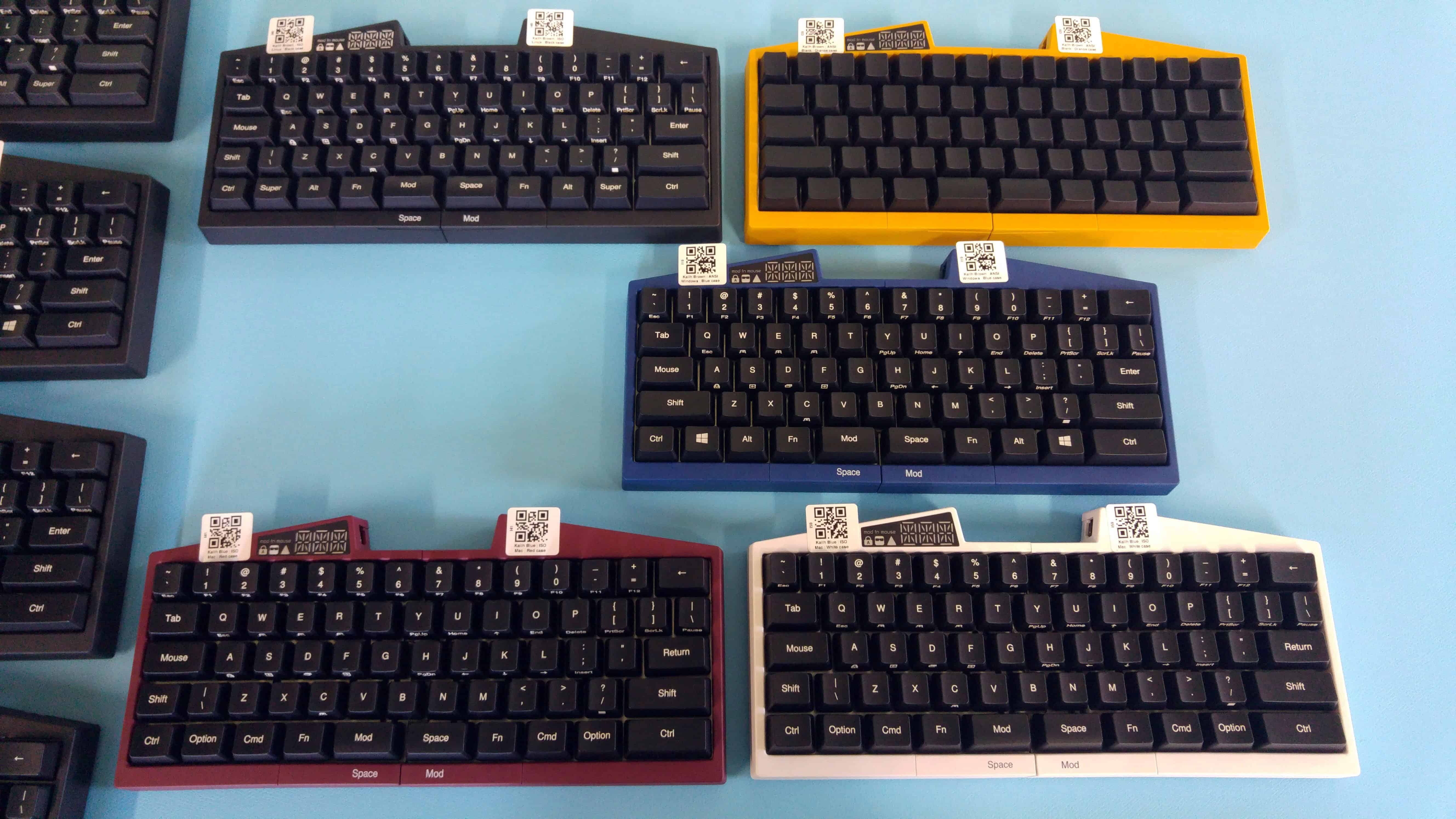
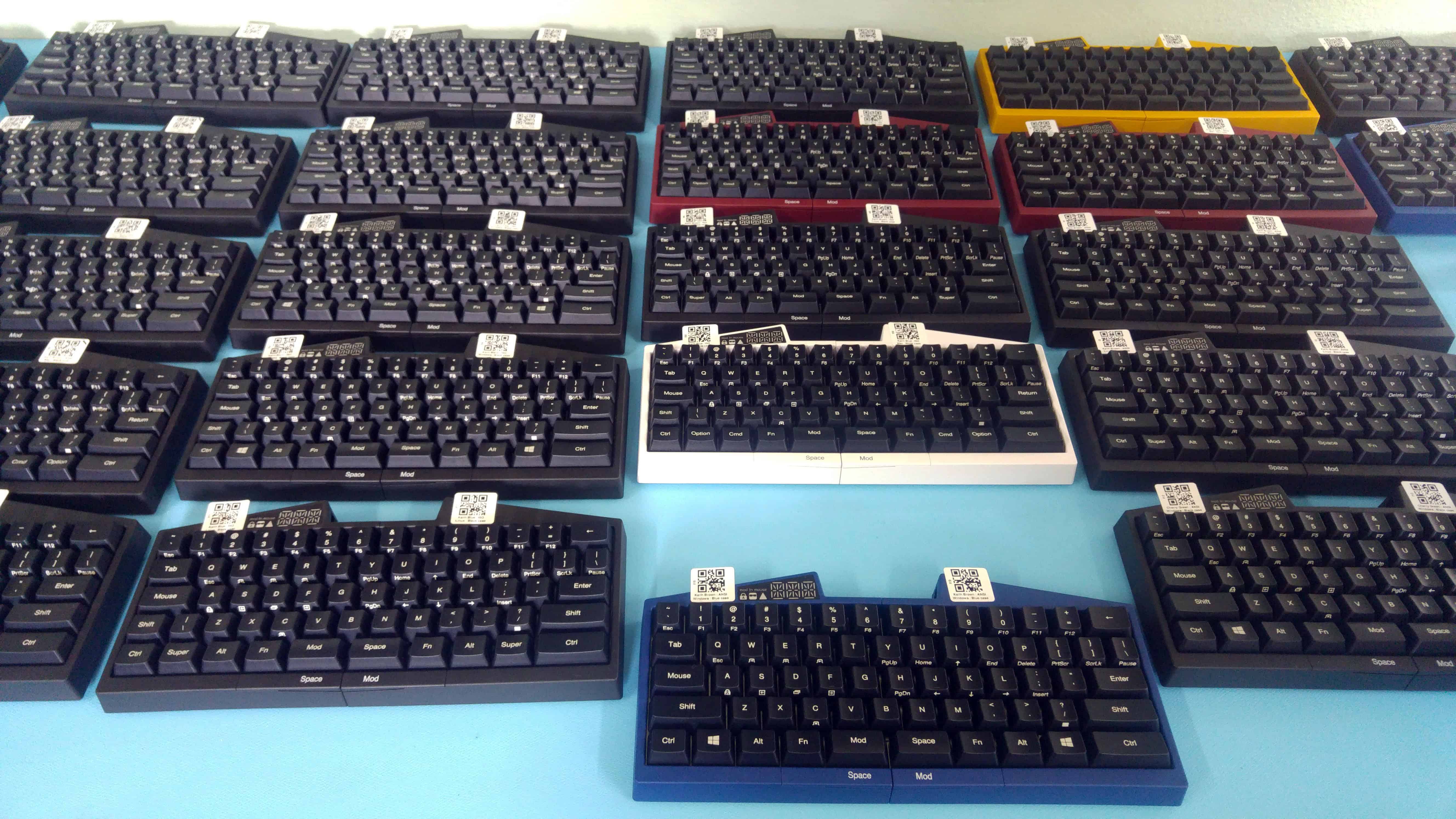
Launching mass production wasn’t exactly a smooth ride, which wasn’t really surprising after all. Given our past experience, some things inevitably go wrong despite our best efforts.
We observed that some LED segments displayed gibberish - that is, unidentifiable characters. It was quite a challenge to figure out the root cause of this, but András succeeded. Apparently, the space is very tight around the FFC cable and when the case is on, it bends the cable and some pins don’t connect. The solution? We just have to bend the FFC cables in an M shape prior to assembly.
We also noticed that some pins of some through-hole components, most notably the keyswitches and the 4P4C connectors, weren’t soldered in on some boards. We talked to our PCBA supplier who told us that their selective wave soldering machine had been misbehaving and got serviced recently. They will also use a 3-dimensional automated optical inspection machine from this point forward which should greatly reduce defects. The problematic boards will be reworked.
Then we were faced with a couple of bent plates. We have yet to figure out how these plates could possibly bend, but for the time being, we’ll do heavier QA until the cause is revealed and eliminated.
And lastly, a critical piece of launching manufacturing is our custom developed order fulfillment and manufacturing execution system that I’ve been working full steam on in the last couple months. It felt like building a runway while the plane takes off, but the runway has been built just in time, and now the plane is in the air.
Given the above issues, we started up slowly. According to our most recent measurements based on actual production data, we will be able to ship about two mini batches per week, which equals about 120 UHKs and related accessories. Given this pace, we’ll be able to deliver batch 1 by the end of July, so this is our current delivery target. Of course, many of you will get your orders way faster depending on your place in the queue.
Starting with the latest firmware, it’s now possible to wake up the host computer with a touch of a key. The LED display also gets disabled when the host sleeps to save power. See the firmware changelog and releases.
Agent got a shiny new desktop icon, it now displays the firmware versions running on the halves of your UHK, and can recover UHKs with broken configurations. See the Agent changelog and releases.
The next big milestone is clear: the modules. The modules clearly differentiate the UHK from every other keyboard in the market, and make it the first and so far only modular keyboard ever created.
Personally, I can’t wait to control the pointer in various ways in a finer grained manner without leaving the home row, and I know that a lot of you share our enthusiasm. I’m sure the journey will be just as exciting as getting there, and as always, we’ll make you part of the journey via these updates.
Thank you for reading this update! The next one will be published on 2018-05-17. In the meantime, feel free to keep checking the delivery status page of your much awaited UHKs.
Hi there, and welcome to our monthly status update!
TL;DR: We’ve pre-assembled the parts of 2,000 UHKs. Things are progressing rapidly, but color-matching plastic parts and pad printing them accurately was more problematic than anticipated. The rejected parts are being remanufactured and are expected to be ready by next week, at which point the assembly and delivery of batch 1 of the first 2,000 UHKs will begin.
We’ve set up a dedicated delivery status page which you can check out to get up-to-date information on how delivery proceeds.
It never ceases to surprise us how seemingly mundane things can go sideways, such as color-matching, or accurate pad printing. Take a look at the following picture.

As you can see, the color of these case buttons is inconsistent. This is the first time we molded all case colors, and some mistakes were made due to lack of experience with the coloring agent. As it turned out, this is not the only thing that can go wrong when it comes to the case buttons.
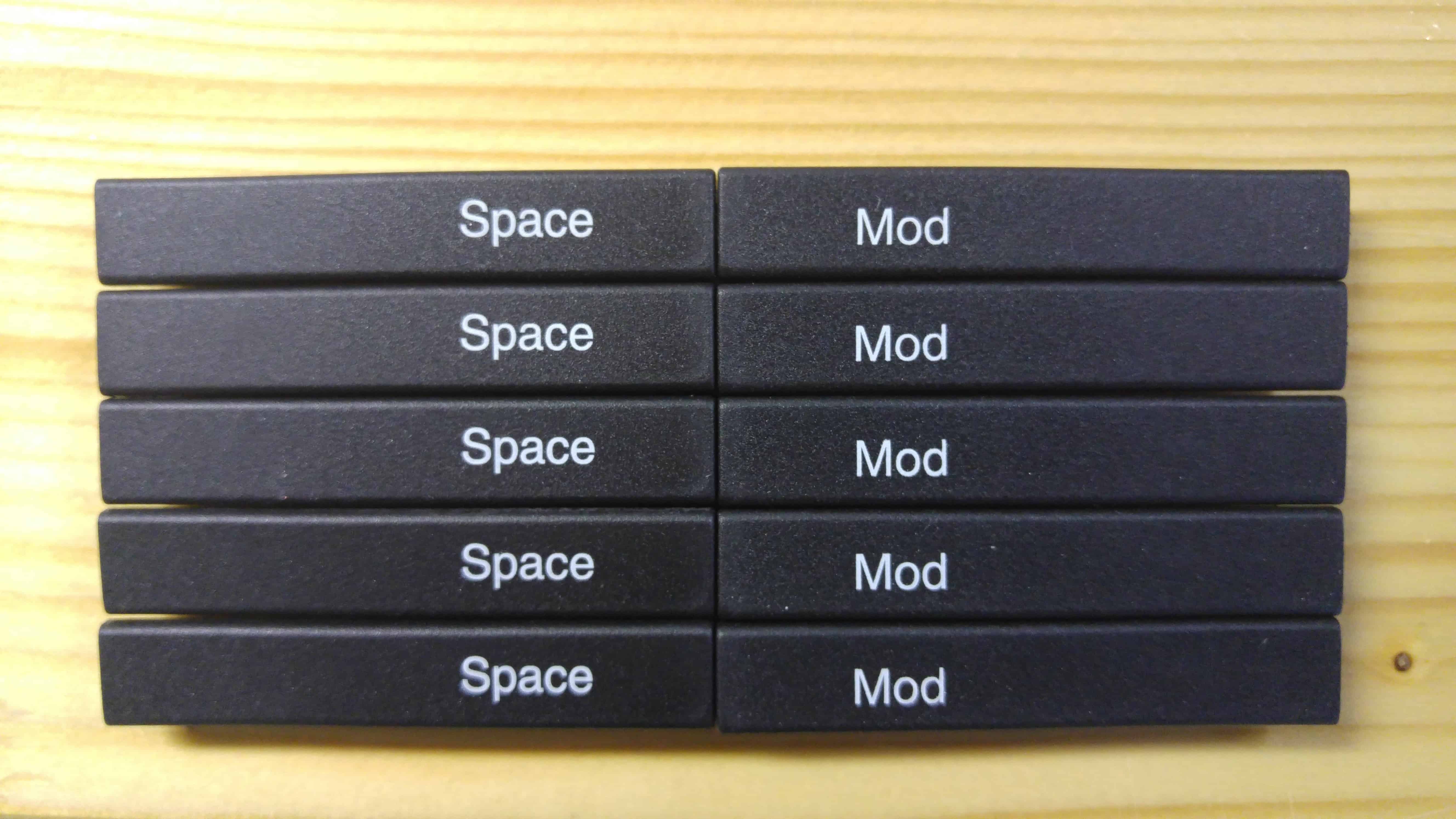
Then we observed that the vertical positions of the Space and Mod labels considerably differ because the pad printing wasn’t set up accurately.
We’ve had our fair share of WTF moments during the manufacturing process. I mean, what can possibly go wrong with seemingly trivial parts like the above? The answer is, as you can see above, a lot. And when one thing goes sideways, the delay of every relevant supplier in the chain adds up, and trivial mistakes can end up costing weeks.
The case buttons are being remolded, and they’ll be pad-printed by the next week, at which point we will finally be able to start up the manufacturing of batch 1.
As I elaborated in our previous update, all UHK option combinations considered, there are 240 different UHK types to choose from, so we have to track orders individually during the manufacturing process, which calls for a custom manufacturing system. We also purchased a fair bit of related hardware, like label printers, barcode readers, and wall-mounted displays to aid assembly workers.
Recently, I’ve been hard at work, developing our custom manufacturing execution and order fulfillment system from the ground up. It’s surely an unwelcome detour amidst of all our responsibilities, but it’s absolutely necessary, and it’ll give us a competitive edge in the long run. The system is already running well, and we’ll be able to start manufacturing next week. I’ll likely have to tweak it during this month, and afterwards we’ll finally be able to give some much needed love to the modules.
You’re welcome to check out the new releases of Agent and the firmware as some improvements have been made which you can benefit from.
Even though a lot of progress has been made since our previous update, we don’t have too much to show besides the above. According to our current schedule, batch 1 will be delivered from March to July and batch 2 will follow very closely. Again, feel free to check out our delivery status page any time if you’re interested in our up-to-date progress, and follow up on social media.
That’s it for now! Thanks for reading this update, and talk to you on 2018-04-19!
Hi there, and welcome to our monthly status update!
TL;DR: We’ve assembled 500 PCB panels, and the parts for the first batch of 2,000 UHKs are being pre-assembled. Right after pre-assembly, the final assembly of the keyboards will proceed. We plan to ship the first batch (ordered before 2017-07-13) of 2,000 UHK from March to May. Closely after the first batch, we expect the ship the second batch (ordered on or after 2017-07-13) starting from June. We’ll ship every non-module items together on a per-backer basis.
Regarding the estimated shipping dates, please note that we can’t precisely tell you when we will ship your order because we have a multi-step manufacturing process in place, and there are some variables involved. As a general rule of thumb, the sooner you ordered, the sooner we’ll deliver. We’ll send out a shipping notification email when the time comes. Also, we can’t move you ahead in the queue because it’d be unjust towards earlier backers.
Effective immediately, we are raising the prices of the following items:
As we elaborated in our previous update, the cause of this raise is the heavy weakening of the US dollar. We don’t plan to raise prices again until delivering all the pre-orders of both batch 1 and batch 2, at which point we’ll raise them by about 10%, which will be the final prices.
Shortly after our previous update, we started assembling the first 500 PCB panels.
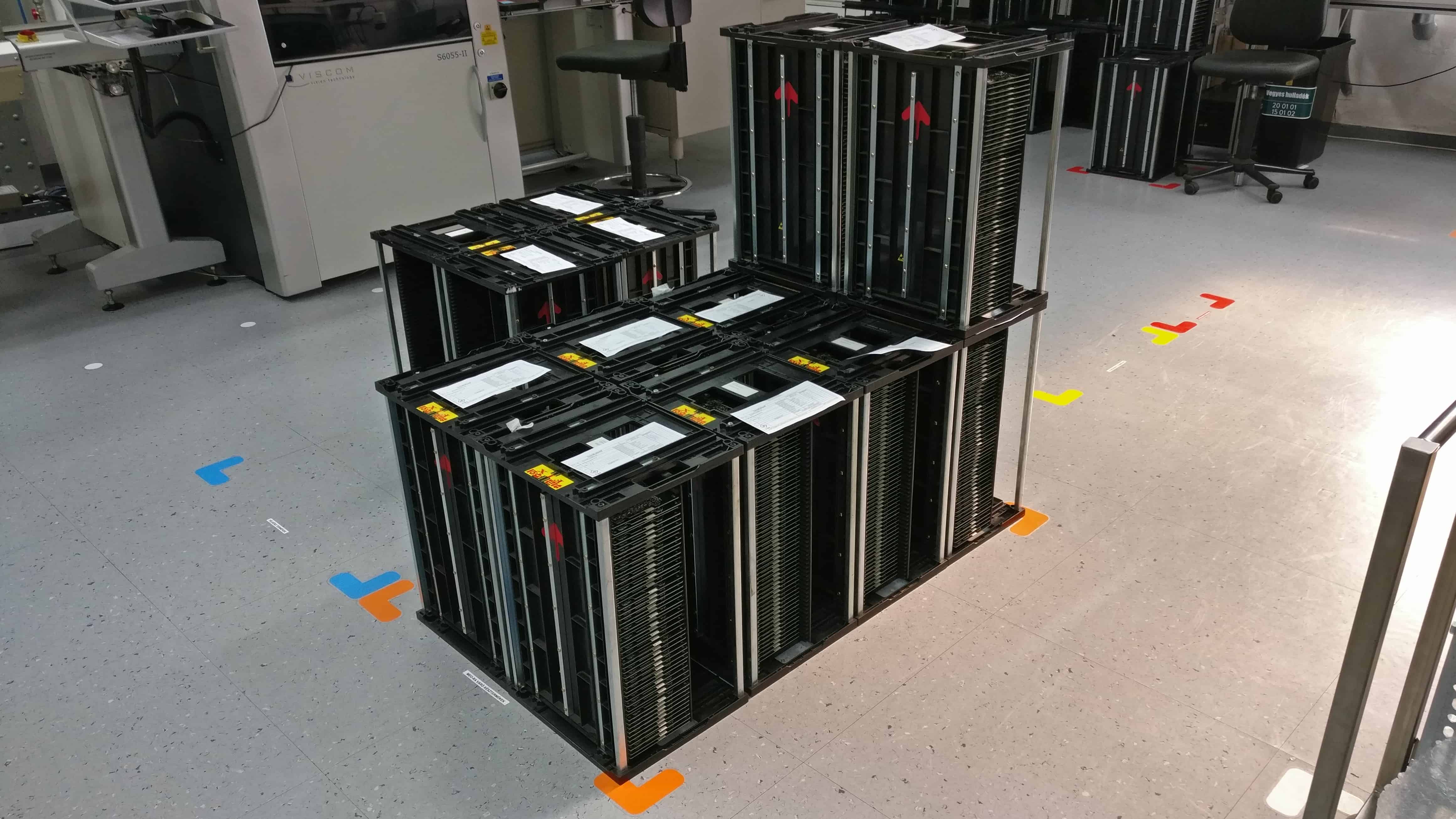
Compared to the pilot run batch of 50 panels, this was a 10x increase. Fortunately, everything went smoothly, and 500 out of 500 panels passed the test.
I was in the factory and flashed every one of these panels. I had no choice, because our custom flashing procedure and software is not sufficiently user-friendly yet. I found this experience to be extremely valuable, because now I can not only make this more user friendly in order to be able to delegate it, but also faster and more robust.
Currently, the parts of the 2,000 UHKs in batch 1 are being pre-assembled. After pre-assembly, we’ll be assembling and shipping every non-module orders from March to May, on a weekly basis.


All things considered, we’re proceeding well with pre-assembly, although colored cases gave us a hard time. As it turned out, the coloring agent makes plastic more rigid, and it resulted in several broken cases when pushing the threaded inserts into the plastic. For the time being, we preheat the inserts before pushing them into the cases which solves the issue. In the future, we plan to slightly tweak the mold to avoid this extra step.
Another challenging aspect of the upcoming assembly process is the staggering amount of SKUs. Currently we offer 2 layouts * 5 case colors * 4 keycap printing options * 6 key switches = 240 variations, probably making the UHK the most physically configurable keyboard on the market.
Internally, we have to track every UHK to make sure that the correct options are implemented during the various assembly stages. This is vastly more complicated than offering a handful product versions, and I had no choice but to develop a custom production management and fulfillment system to deal with this situation. Some parts of the system are already working, and I’ll be focusing on this in the near future to make production and fulfillment a smooth ride.
While dealing with production, we haven’t forgotten about Agent and the firmware and we keep improving them. We released new versions recently, and you’re welcome to grab the latest Agent and flash the bundled firmware to your UHK. Also feel free to check out the Agent changelog and firmware changelog. We’ll keep making incremental improvements until we smash every bug and make the user experience heavenly smooth.
A while back, we only had photos of our prototypes, which didn’t do justice to the final product, so we took a few photos of a production UHK. We’re quite excited about these photos, and would like to show you some of them below.


And that’s it! Right now, our primary focus is the delivery of batch 1 and, closely after that, batch 2 orders. After that, we’ll focus on the modules. In true UHK style, we’ll be keeping you updated.
Thank you for reading this update, and talk to you on 2018-03-15!
Hi there, and welcome to our monthly status update!
TL;DR: The first 50 UHKs and palm rests of the pilot run were delivered, and according to the feedback we received it was a huge success! The recipients of the pilot run gave us a ton of feedback, so we’ll go over the issues they encountered, and tell you how we’ll fix them in upcoming batches. We’re raising the price of the palm rest to $55, and we’ll raise the rest of the items by 10% soon. We plan to deliver the remaining 1,950 UHKs of the first batch from February to April. We’re putting an increasingly heavy emphasis on finalizing and manufacturing the modules.
It’s one thing to design a product, and another to ship it to all over the world. András and I poured our hearts and souls into this project, we obsessed about the smallest of details, and even though we were definitely hoping for the best, we couldn’t know for sure how much you’d like the end product, so it’s safe to say that we were excited.
I’m happy to say that the feedback we received from the recipients of the pilot run was absolutely fantastic! You praised the overall build quality, the nice packaging, the onboarding experience, and the ease of use of Agent among other things.
Let me feature a couple of your tweets:
@UltHackKeyboard It arrived safe - very much worth the wait 👍 pic.twitter.com/OtyuL568X2
— h1ro (@h1ro) December 19, 2017
Ok last pic of the #uhk for tonight 🙂 #GotMyUHK @UltHackKeyboard pic.twitter.com/vLVX2RpwRt
— LifeMadSun (@leifmadsen) December 30, 2017
Yay I've #GotMyUHK and it's utter awesome sauce!! I'm going to test the hell out of it (and so is the professional test panel 🙂 @UltHackKeyboard pic.twitter.com/BMp2qmRCoY
— Jelle (@jellehermsen) December 20, 2017
At work, finally. Is a new year, and I'm ready. Out with the old. In with the new.
Bye bye, WASD.
HELLO @UltHackKeyboard ! pic.twitter.com/WkjDSbef5A— William Daniel (@williamdaniel) January 17, 2018
Thanks so much for the posts, everyone! Your enthusiasm and support have been overwhelming!
Despite its success, the pilot run wasn’t without issues. In the spirit of transparency, we’ll go through all of the issues you encountered.
There are two small boxes within the main UHK box which got smashed on four occasions out of the fifty pilot run units. We believe that some of these occurrences went unreported, and there may be more. This is what a smashed box looks like:
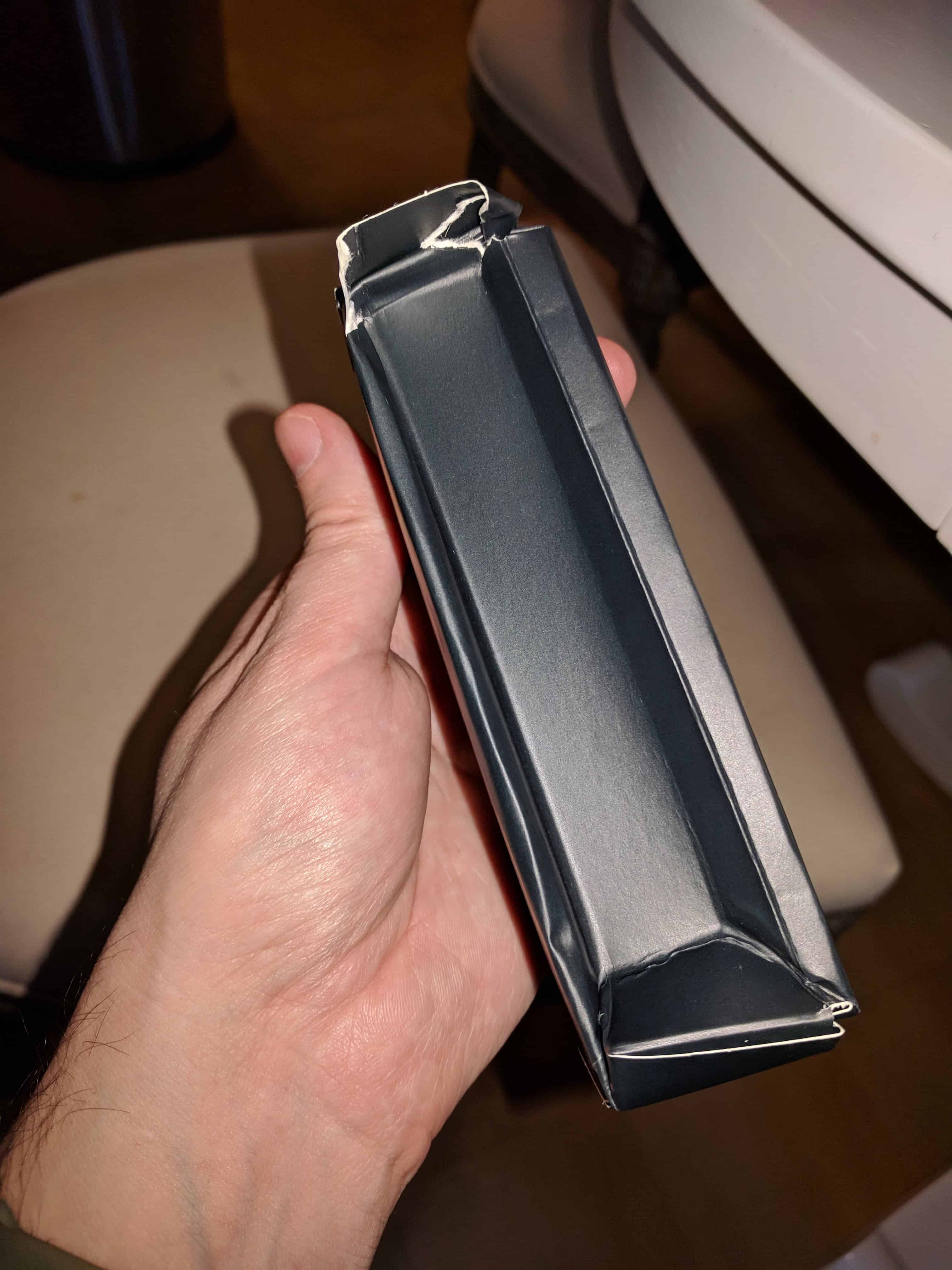
We spent a ton of time and a fortune on packaging, so this is a big deal. Even worse, on one occasion, even the case of a keyboard snapped apart. Luckily, the owner managed to snap it back with a bit of pressure, but this doesn’t make the issue any more acceptable.
According to the reports we received, only USPS-shipped UHKs were affected. We’re not sure whether it was due to the holiday madness, or if it’s a general issue, but we reinforced the boxes, which will hopefully resolve this issue in the long run.
There are two recesses in the case which hold the USB cable and they’re way too sharp and chew up the USB cable quickly.
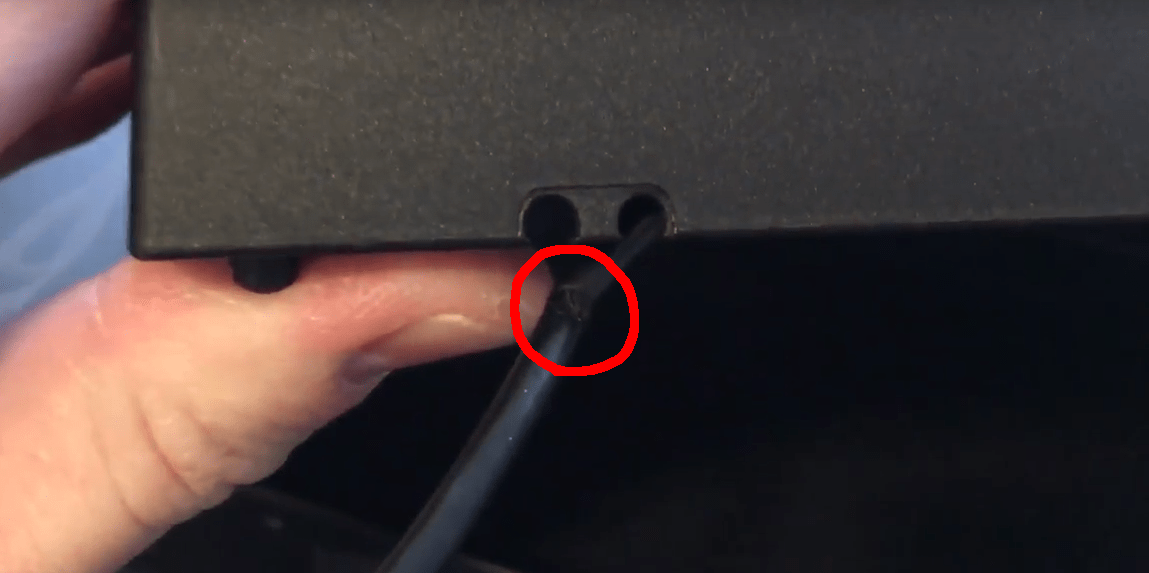
The mold has already been modified, so the edges should be smooth going forward. A backer reported that he easily managed to sand down the sharp edge, resolving the issue in no time. If you’re affected, you might want to do the same, but if you want a replacement case, please just let us know.
Some of you reported strange artifacts appearing on your LED display, which is a sure sign of a loose FFC cable.
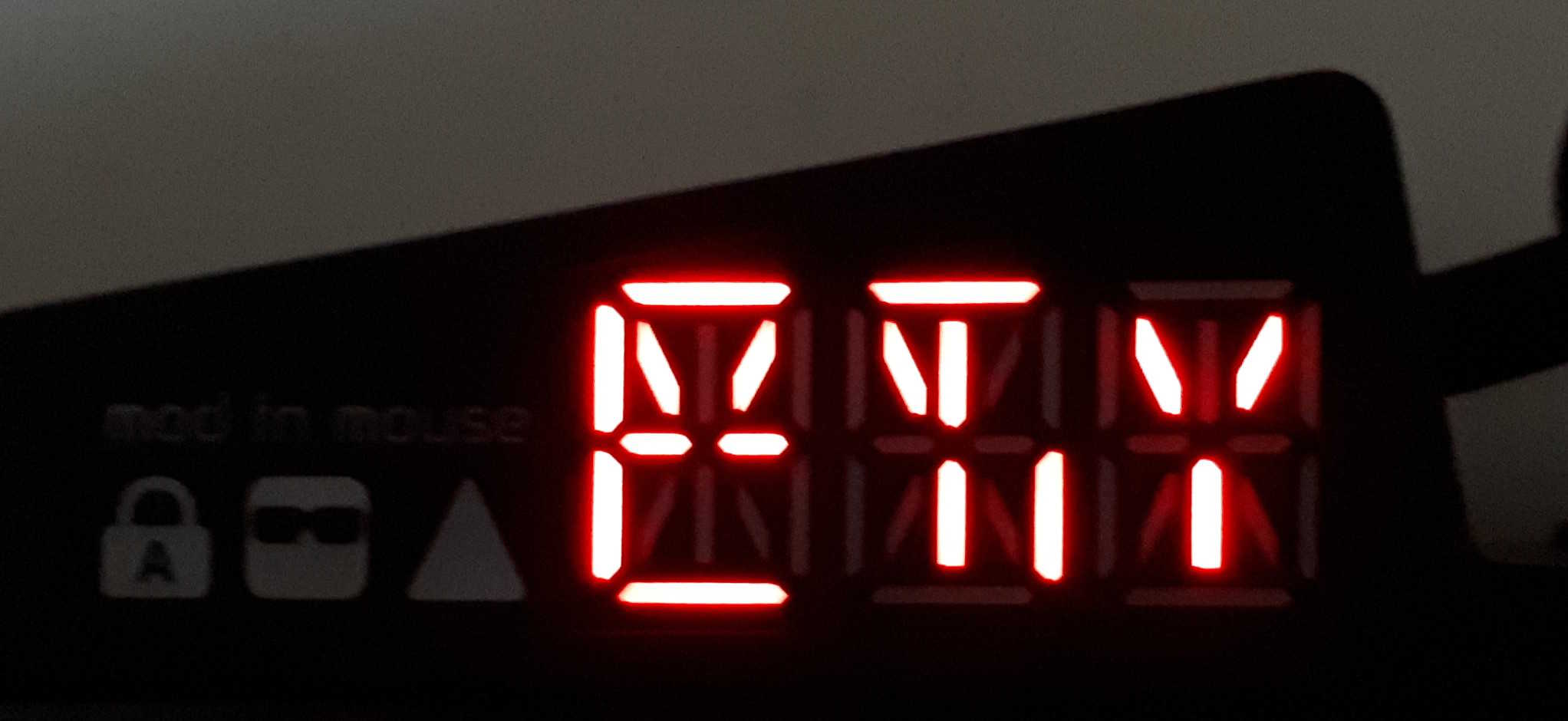
The FFC cable connects the display with the left main board. Apparently, we could have done a better job connecting them during the assembly process. As a result, the cables of two UHKs got loose during shipping. We’ll try our best to more thoroughly assemble future batches.
This issue called for our first ever repair guide. We have already emphasized the importance of repair before, and this was the golden opportunity to follow our words up with action. Both affected backers were able to fix the issue using the guide and they even contributed to it. Thanks so much!
Just to get things straight, we don’t expect anybody to repair his/her UHK, but the opportunity is there, and we encourage repair in general. It’s certainly much faster than sending it back and forth to the other side of the world, and especially useful after the warranty period is over.
On two occasions, visible artifacts were noticeable on some feet.
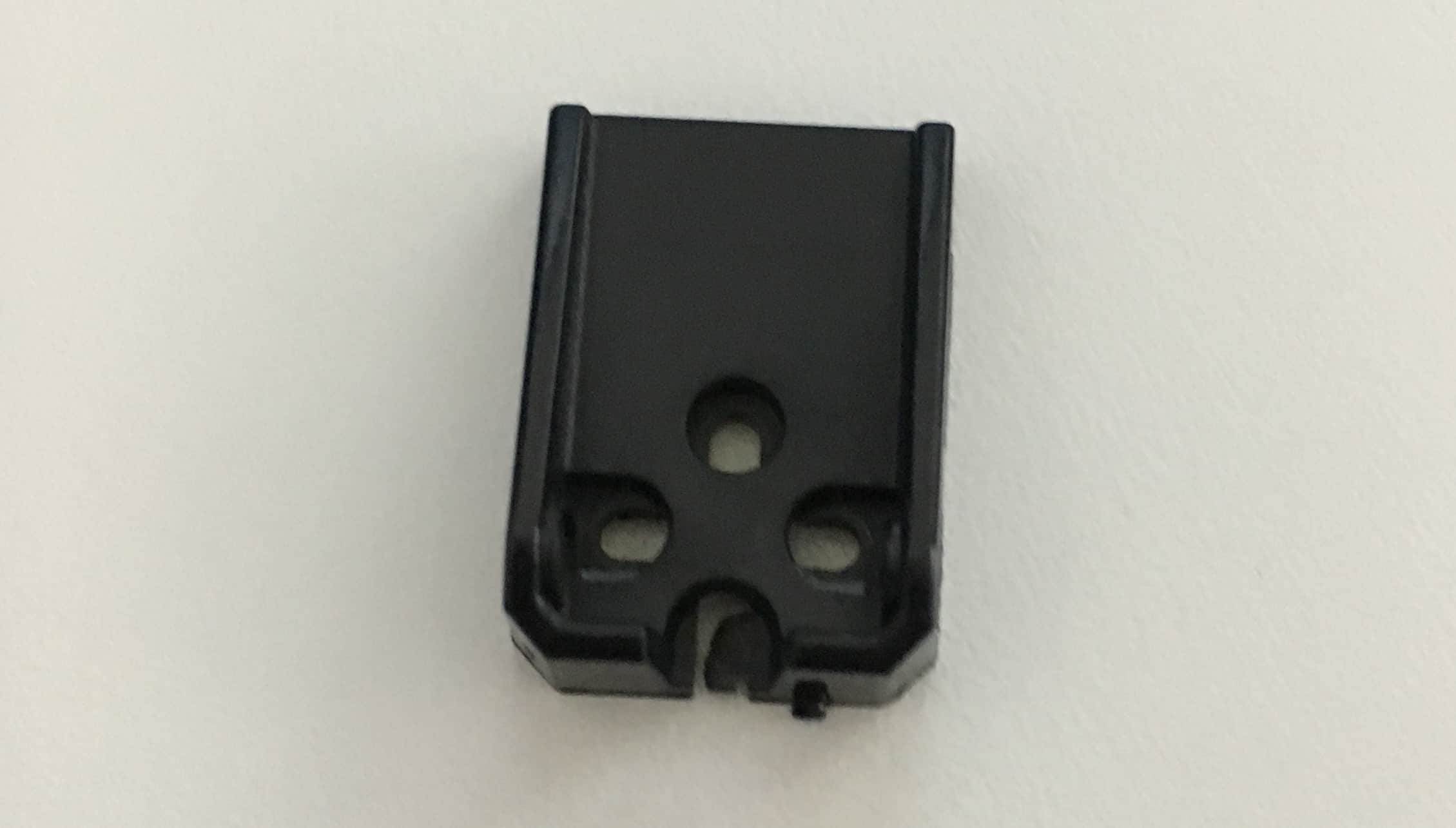
This is clearly an injection molding issue. We’ll do heavier QA in this respect.
A number of issues have been reported recently in the firmware and agent repos. The vast majority of these issues are not critical, but they affect usability in one way or another.
Understandably, we’ve been mostly busy with the critical issues. The most critical was a firmware issue that made the UHK freeze after a while. This was really annoying because it was super hard to find the root cause of it. Luckily, it looks like we’ve been able to resolve this, and it shouldn’t affect more people.
There was another critical issue in which the left keyboard half got bricked during the firmware update process. I’ve made the update process more robust, and improved the update script, which unbricked the unit. This script feature will be integrated into Agent soon. The UHK should very rarely get bricked, and when it happens it should always be unbrickable.
Going forward, we’ll be addressing all of the issues of the agent and firmware repos, but there’s a lot on our plate nowadays, so some may take a while. We’re doing our best.
Mikko Lakomaa, an early contributor of ours, switched into high gear after receiving his UHK, and implemented two much-welcomed issues. Thanks to the fruits of his labor, now we can adjust mouse speed and LED brightness via Agent.


Thanks so much for your contributions, Mikko! It’s nice to see Agent improving so rapidly.
Effective immediately, we’re raising the price of the palm rest to $55, and we’ll raise the rest of the items by 10% soon. Let me explain why.
When we originally envisioned the UHK palm rest, its design wasn’t finalized, and we weren’t sure about the materials and technologies we’d ultimately use to craft it. We were also unfamiliar with the costs involved. As the design progressed, we were consistently moving toward an increasingly high-end, premium product which inevitably added to its cost, so much so that up until this point we haven’t had any profit on the palm rests when selling them for $30.
For what the palm rest is worth, $55 is still a bargain considering the market prices. If you search for “wooden wrist rest”, $40 is a usual price tag, but those palm rests are made of one wood piece, not two pieces, don’t feature powder coated black plates, and their geometry is less ergonomical (simpler, thus cheaper to machine) than the UHK palm rest.
Eventually, we’ll further raise the price of the current wooden UHK palm rest to about $80 which is a reasonable market price, but before doing so, we plan to offer a less premium, and more affordable palm rest in addition to the current wooden palm rest.
We’ll also soon raise the price of the other items by about 10%, including the UHK, extra keycap sets, extra cases, and the modules. This is justified by the heavy weakening of the US dollar during 2017. We pay our suppliers primarily in Hungarian forint, so this very much affects us. 10% is actually less than the weakening of the dollar which is about 15%, so we’re trying to not raise prices too heavily.
Nobody likes price increases, but we’d much rather take this route than sacrificing quality, or allocating less funding for R&D. We hope you understand and resonate with our mindset.
Going forward, our most immediate goal is to deliver the remaining 1,950 UHKs and accessories (everything but the modules) of the first batch. We expect to deliver these items from February to April, and then the second batch will closely follow.
Our assembly operation is admittedly micro-scale compared to the assembly lines of China. As we previously stated, instead of hiring a Chinese OEM for assembly, we opted to set up our own assembly line in Hungary and operate it in the long term. This has numerous benefits, like rigorous QA and direct control, but the downside is that the throughput of this line is rather low.
It wouldn’t make sense to massively scale up production because the accumulated preorders translate to a huge peak regarding assembly. It’ll considerably settle down after delivering the pre-orders, so hiring a bunch of people only to fire them soon afterwards doesn’t seem like a good idea.
We plan to keep assembly going continuously, and ship so-called mini batches on a weekly basis. We’ll remind you in a future update to change your shipping address before orders start going out, but please do check/change your current address by going to your Crowd Supply account.
As for the modules, fear not, we didn’t forget about them. We’ll be allocating more and more resources to finalize and manufacture them. András has been working on them recently, and this is the latest, and probably final design of the trackball module.
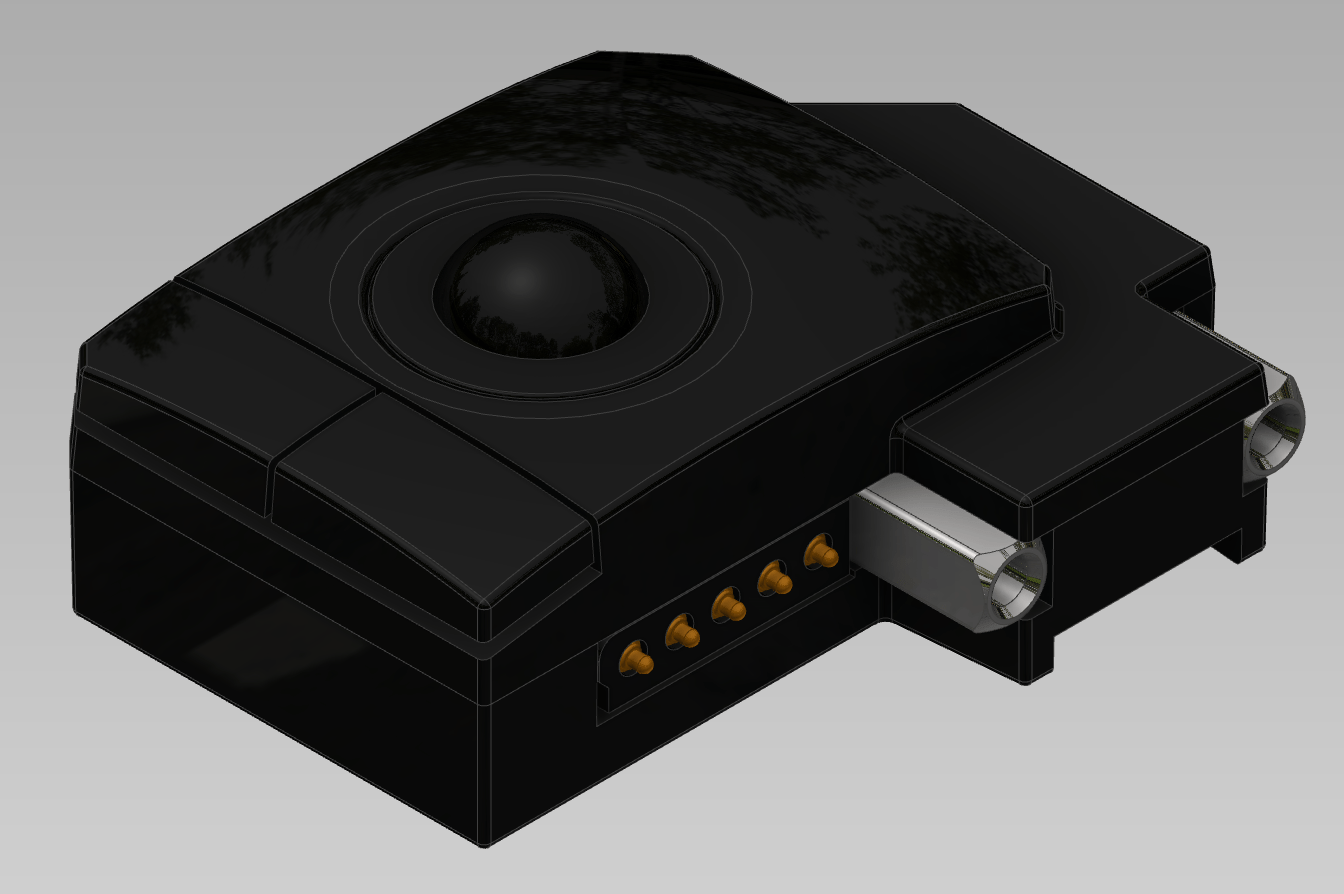
I think András did a great job designing this module. I cannot wait to see it work and give it a whirl (pun clearly intended).
Thank you for reading this update! We hope you enjoyed it, and we’re excited to talk to you on 2018-02-15.
Hi there, and welcome to our monthly status update!
TL;DR: The 50 UHKs of the pilot run and their palm rests have been assembled and will be shipped on Monday. We’ll ramp up production afterwards, and continue the fulfillment of the rest of the crowdfunding starting in January.
Before the pilot run assembly, our contractor assembled four UHK panels, so that we could examine and approve them. We’ve taken a thorough look at them, and I noticed that the 4P4C jacks didn’t seem right. An older version of the jacks was used which we replaced a while ago with another jack. The spiral cable could not be removed from the older jack because its plug was too deep in the jack when the UHK was fully assembled, which is why we changed it in the first place.
Our contractor originally ordered the correct part, but the component distributor quoted an alternative replacement part and didn’t explicitly tell our contractor of the change. It’s pretty hard to spot these replacements in a long component list, hence the wrong part was ordered.
This miscommunication error cost us a couple days to get replacement jacks, but luckily no other issues were found.
The next step was SMD assembly which went very smoothly. This is a short video of the process:
As you can imagine, there are a number of steps involved in this process:

The boards not only look beautiful, but they all work perfectly. This is a pretty good start.
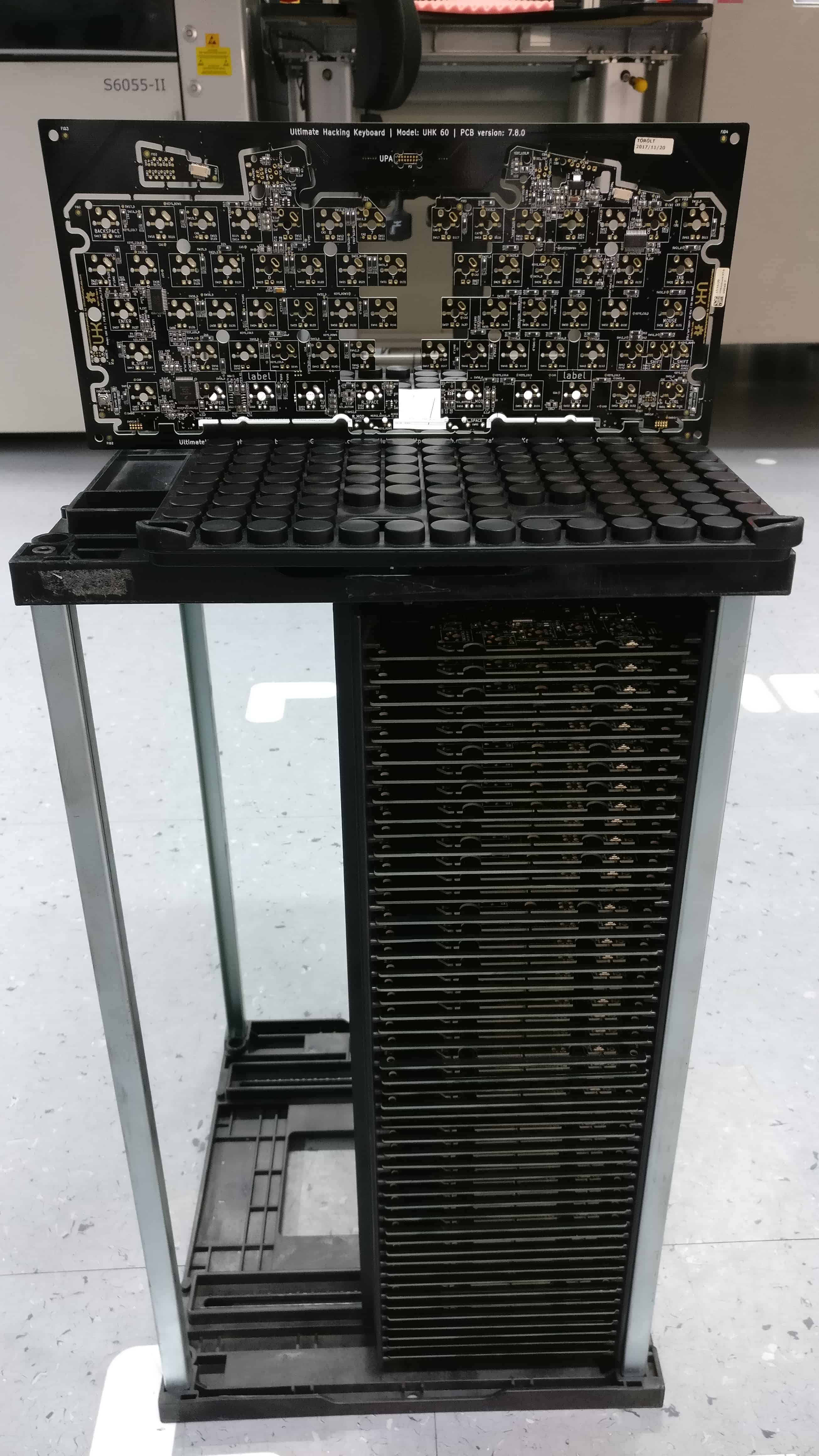
We left the boards at our contractor to get the through-hole parts soldered, and some days later they sent us the fully assembled panels.
Unlike the PCB assembly, the mechanical assembly is a fully manual operation. It involves breaking out the PCBs from the panels, placing the panels into the pre-assembled bottom cases, screwing the metal guides to the plates, assembling the top and bottom cases, and putting the keycaps on the key switches. The result is 50 beautiful pilot run UHKs, ready to be shipped.

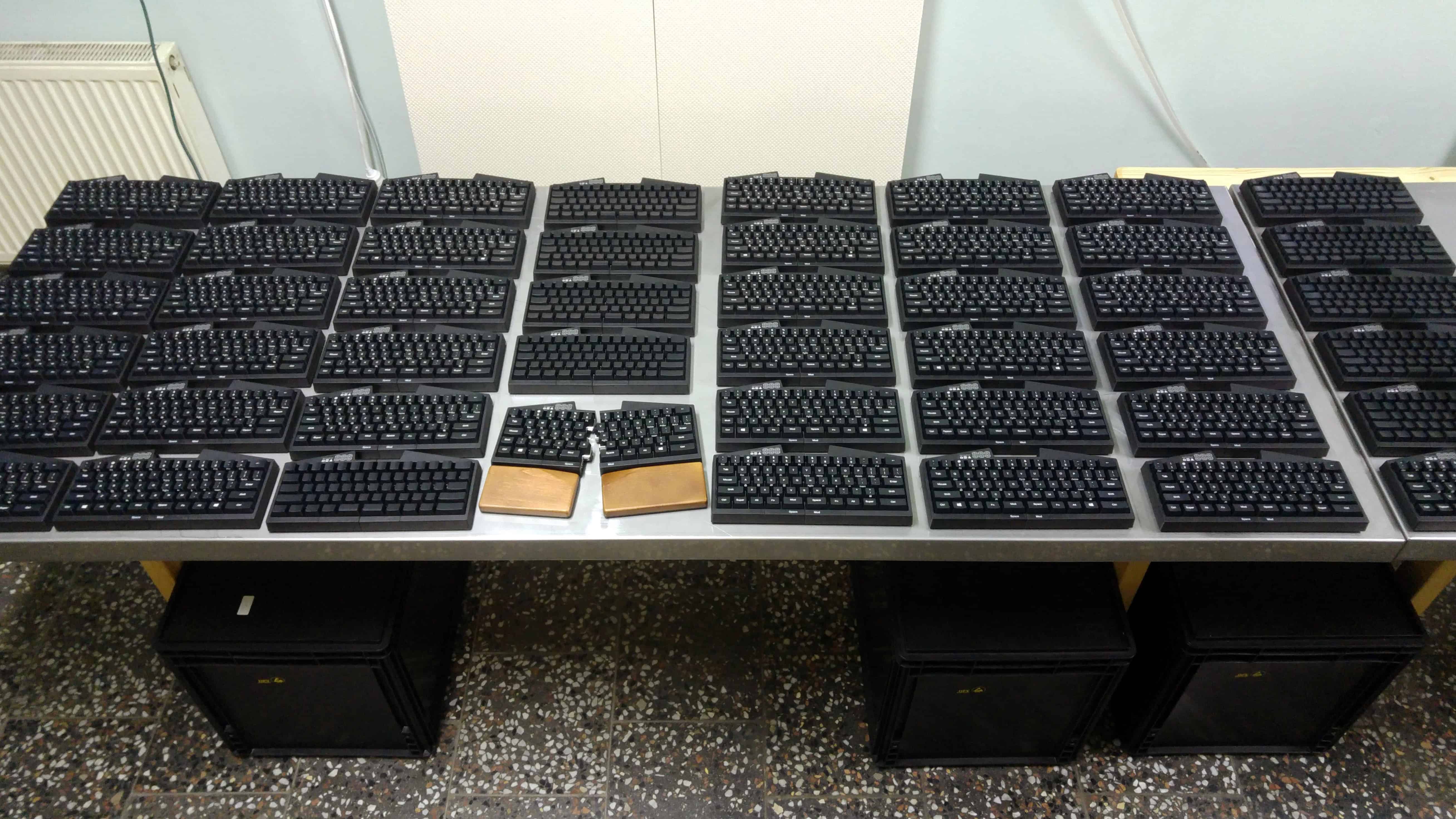
Right now, we’re working on assembling the palm rests, and on Monday the UHKs and palm rests of the pilot run will be shipped. Exciting times!
Being located in Hungary, the first UHKs of the pilot run are expected to arrive in Hungary, then to the rest of the EU, then to the US, then to the rest of the world. We deliver the EU units directly, and the non-EU units via Crowd Supply (based in the US). We can’t change this in any way, or ship directly to everyone due to accounting reasons. Please note that except for the above, we do ship on a first come, first served basis. You will receive a shipping confirmation email with a tracking number from Crowd Supply when you order ships. If you need to change your shipping address, do so now through your Crowd Supply account. For questions on shipping, see The Crowd Supply Guide.
We’re hoping that most, or all of the pilot run UHKs will arrive before the holidays, but being just before the holiday season, we’re not sure.
Starting in January, we’ll scale up production and plan to fulfill the first batch of orders in 1-2 months. Afterwards, the second batch will follow. We’ll be keeping you up-to-date.
Thank you for reading this update! We wish you a Merry Christmas and Happy New Year, and we’ll talk to you on 2018-01-18.
Hi there, and welcome to our monthly status update!
TL;DR: We’ve passed both FCC and CE! We’re assembling the PCBs of the pilot run next week and shiping the first pilot run of 50 UHKs around the end of November. We’ll do our best to start to delivering the rest of the UHKs in December, but we may slip to January due to the holidays.
We assumed that CE is a piece of cake after we passed FCC so easily, but as it turned out, it wasn’t a walk in the park at all. First, I got a message from TÜV Netherlands saying that we failed CE. They shot one of the UHK prototypes with an ESD gun at the bronze inserts in the back. A discharge of -6kV made the prototype permanently dysfunctional.
Given that FCC was already done by TÜV Netherlands and TÜV Hungary is entitled to certify CE, I called back both prototypes to Hungary. Upon arrival, I investigated the failed one, and saw that the microcontrollers in each half and the FB7 ferrite bead of the right half were fried. After replacing these parts, the prototype was perfectly functional again.
In order to prepare for the next CE test, András fabricated a couple of rubber caps which I glued to the bronze inserts inside of the plastic case to isolate them from the PCB.

Armed with this fix, we went to TÜV to conduct the next test.
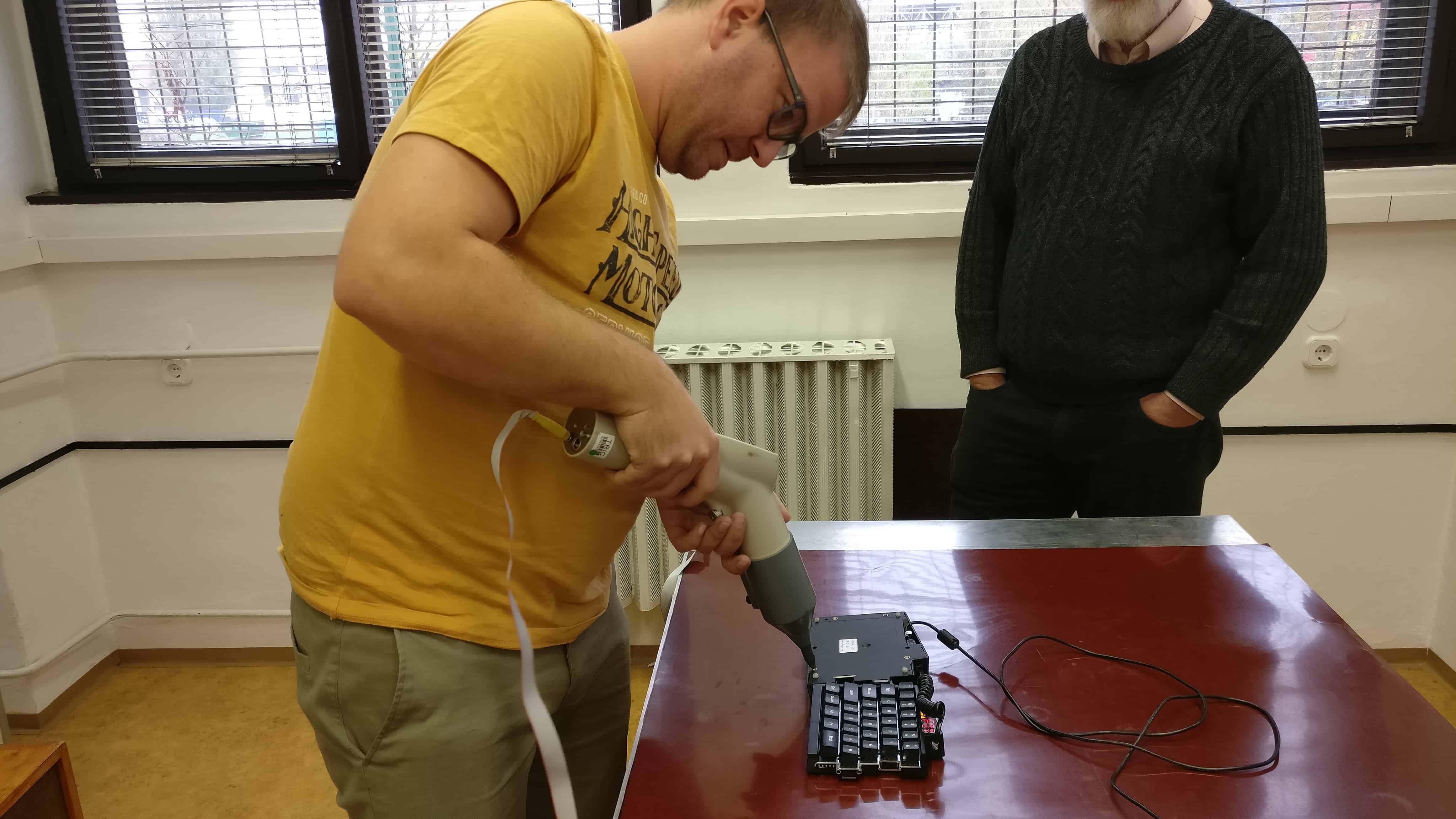
Oddly, not only the sealed inserts passed the test, but the non-sealed inserts, too. We couldn’t reproduce the issue that TÜV Netherlands hit, but we found another one.
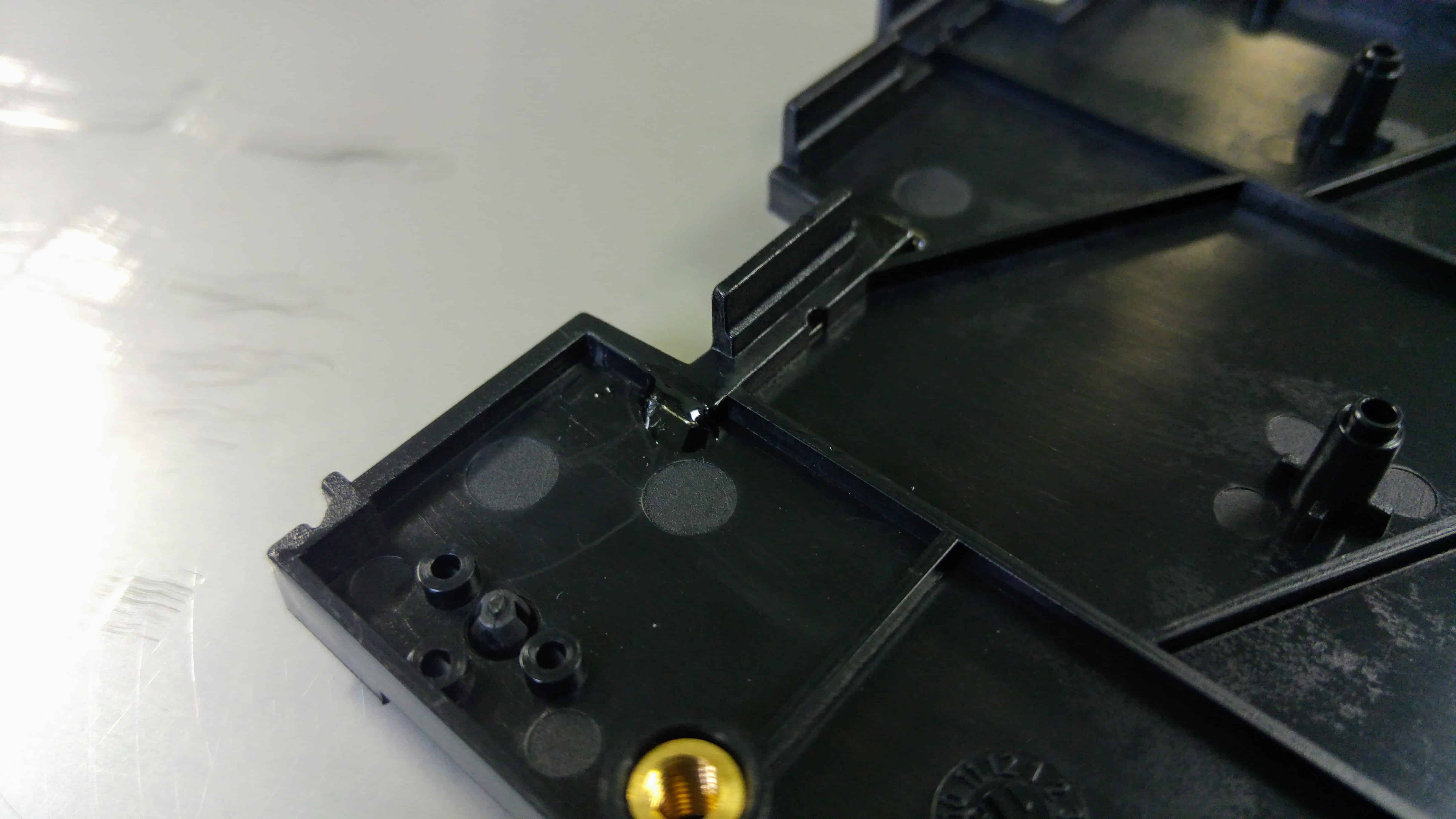
When Balázs shot the magnet of the right half with the ESD gun, the prototype failed. The lights went out, and operation could only be restored by power cycling the prototype. Even though it’s not a terminal failure, according to the standard, this is a fail.
We came up with an idea on the spot: insulating tape. We stuck some tape to the ends of the right magnet inside of the case which made the prototype hardly ever fail. This wasn’t a sufficient solution because the magnet had to be better sealed. We figured that epoxy should work really well because it withstands 11 kV/mm, and just as assumed, it did solve the issue indeed.
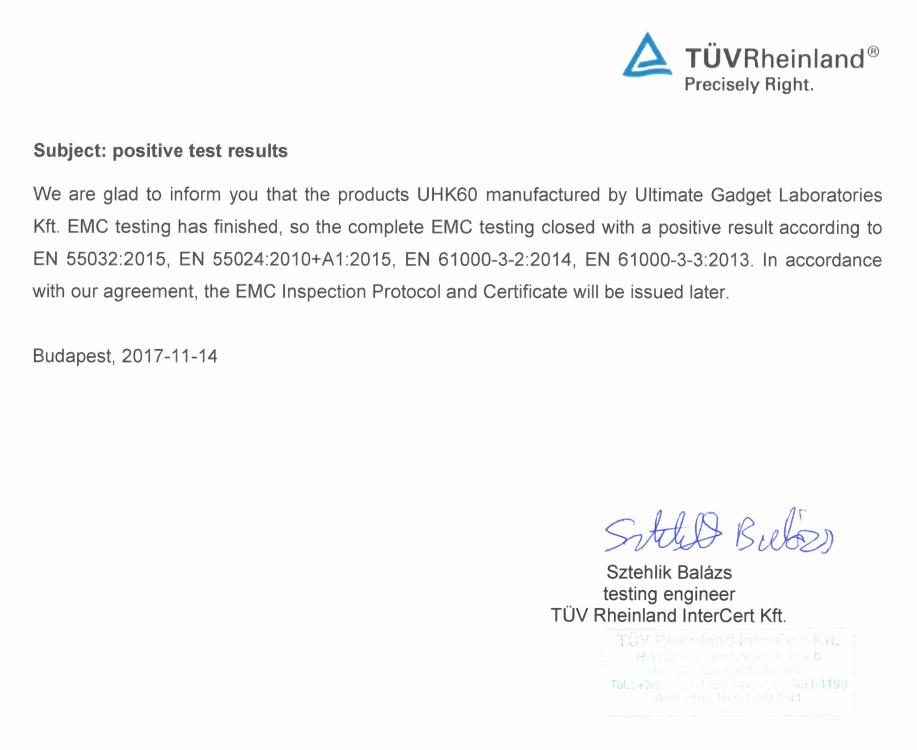
This is the preliminary CE pass for your viewing pleasure:
And this is the pass section of the official FCC certification:

Ultimately, we’ll modify the molds to seal the magnets with plastic. ABS withstands 20 kV/mm, so it’s an even better insulator than epoxy, and we won’t have to apply drops of epoxy during the assembly process. Until the molds get modified, we’ll apply epoxy to the current cases that we ship to the EU (CE being EU-specific).
Now that we’ve passed both FCC and CE, we’ll launch PCBA very shortly. Our PCBA contractor is eager to start. Surface-mount assembly is scheduled for next Monday, through-hole assembly is scheduled for later in the same week.
We recently visited a company to choose the colors of the non-black cases. Instead of using their stock colors, we ended up asking for custom colors according to the rendered images that you can see on the order page.
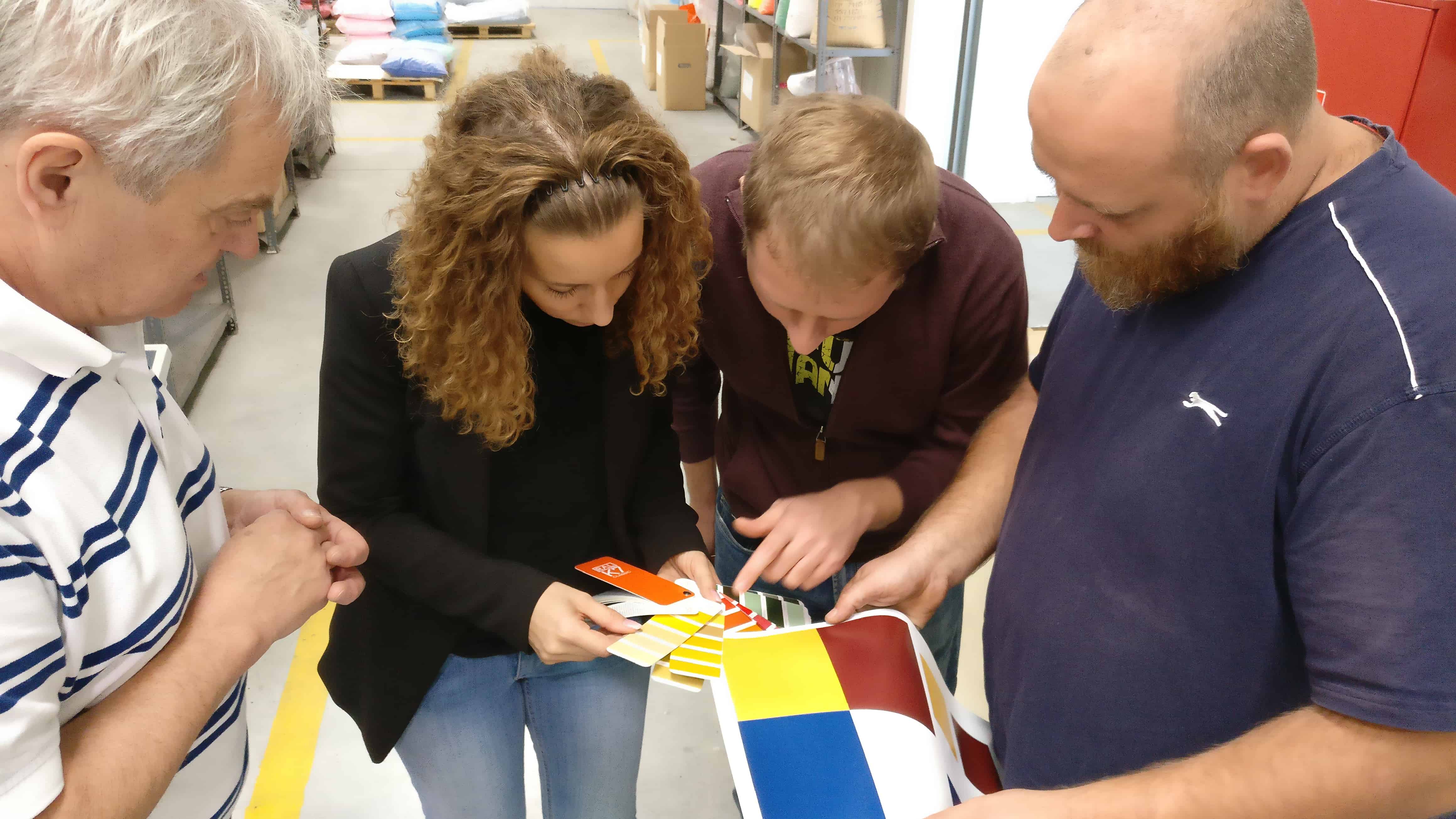
I’m happy to report that the first colored UHK cases just rolled off the assembly line.

We can’t wait to see the colored UHKs fully assembled!
The correct back stickers have finally arrived, and we applied them to the back of the cases. Next, the top and bottom cases are (separately) assembled featuring all the bells and whistles.
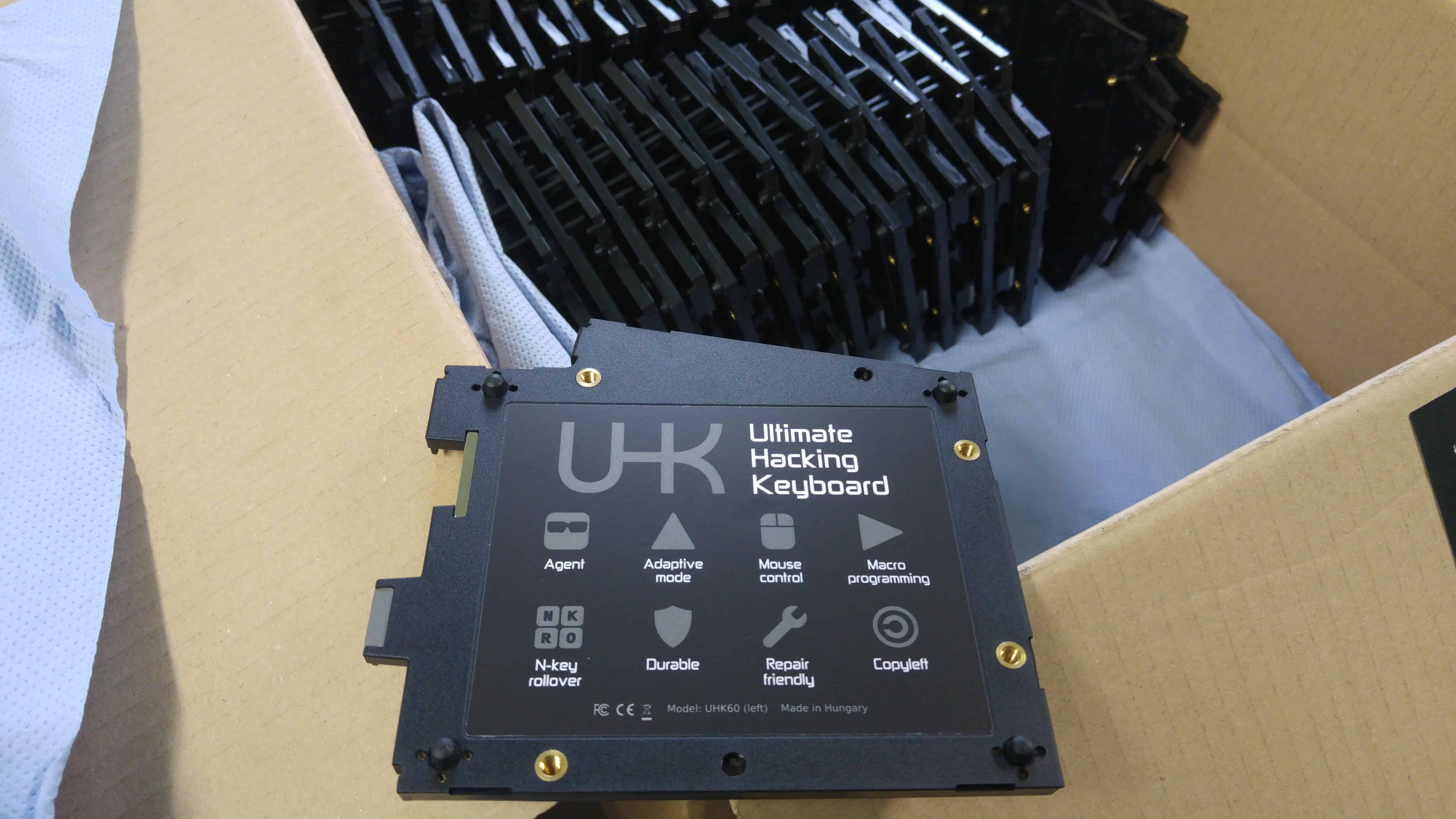

We recently noticed that the pad printing of the right case buttons is off. The position of the print has been misaligned by 2 mm. New case buttons will be printed this week.
We also noticed that the LED display was hard to see in bright light, so we asked our supplier for some new samples, and they were able to improve upon the design. Now the manufacturing of 3,000 new LED display films is in progress. They’ll likely arrive next week, at which point, we’ll remove the old films from the displays and apply the new ones.
The outer boxes into which the smaller product boxes will be packed for shipping are being manufactured and are scheduled to be ready next week.
I’ve been super busy with the firmware, landing about 150 commits in the firmware repo since our last update, and released a new version. You’re welcome to read the changelog.
Robi has finished the cross-platform build system of Agent and released versions for Linux, Mac, and Windows. The next step will be the the auto update feature, and integrating the firmware upgrade scripts to Agent, so Agent will be able to update the firmwares of the keyboard halves and modules.
As for the estimated delivery schedule, we plan to send out the 50 pilot run UHKs by the end of November. Then we’ll wait about a week or two for the feedback of the pilot run recipients to make sure that everything is up to snuff. Afterwards, we’ll try our best to launch the delivery of the remaining 1950 UHK of batch 1 in December, but due to holiday season we may have to postpone the shipments to January. We’re trying hard to deliver as soon as possible, but we won’t rush things at the expense of quality.
Thank you for reading this update! We’ll talk to you on 2017-12-14.